


Two environmental groups are suing Burlington Northern Santa Fe over the train-related deaths of dozens of federally protected grizzly bears in northwestern Montana and northern Idaho.
In a lawsuit filed in a federal district court in Missoula, WildEarth Guardians and Western Watersheds Project argue that the Endangered Species Act prohibits Burlington Northern Santa Fe and its subsidiary, BNSF Railway Company, from continuing with an unauthorized “take” of grizzlies, which are a threatened species in the lower 48 states.
The lawsuit focuses on tracks owned and operated by BNSF between Sandpoint, Idaho, and Shelby, Mont. The groups allege that between 2008 and 2018, trains on BNSF railways “killed or contributed to the deaths of” approximately 52 grizzly bears located within the Northern Continental Divide Ecosystem and Cabinet-Yaak grizzly bear recovery zones.
RELATED

Death on the tracks
After a 15-year wait, Burlington Northern Santa Fe produces a plan to mitigate — but not reduce — grizzly mortality by train strike.
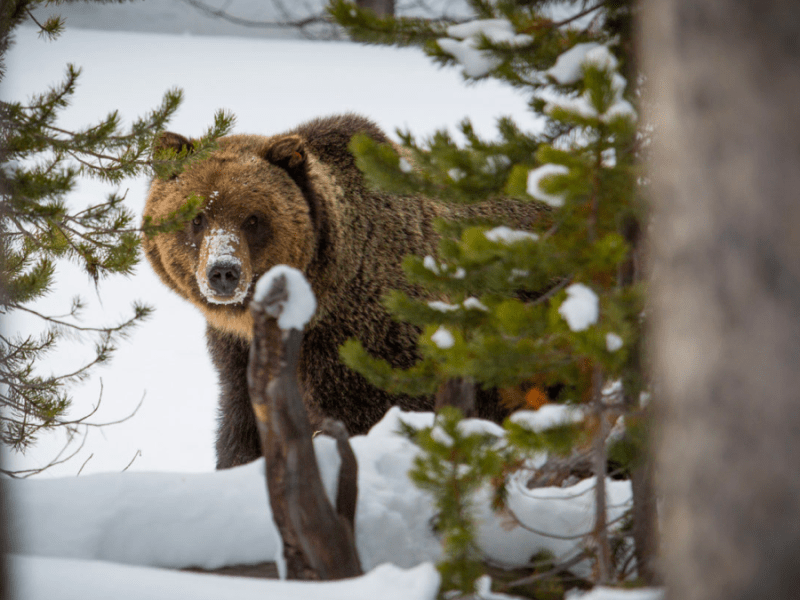
Feds to explore delisting of Greater Yellowstone and NCDE grizzlies
The agency’s announcement was welcomed by Republican officials, who’ve long sought to restore management of grizzly bears to state agencies. Environmentalists questioned whether USFWS is fulfilling the mandates of the Endangered Species Act and cast doubt on Montana’s ability to manage grizzlies sustainably.
The complaint also notes that at least 11 grizzlies were killed by trains between 2019 and 2023, including eight bears that died on or near BNSF-operated railways in 2019 and another three that were killed on BNSF-owned tracks during a two-week period this fall.
U.S. Fish and Wildlife Service, the federal agency charged with managing threatened and endangered species, has not finalized the incidental take permits that BNSF proposed in 2004, 2020 and 2023. USFWS hasn’t finalized the habitat conservation plan — the company’s proposal to mitigate grizzly deaths by making changes to its operations and contributing to other grizzly sustainability measures — in those years, either.
The latest version of the habitat conservation plan that BNSF proposed included funding for two new Montana Fish, Wildlife and Parks grizzly bear technicians and a grizzly bear technician to be employed by the Blackfeet Nation. It also included financial support for waste management, electric fencing, hunter education and grizzly monitoring equipment. A separate $1 million reserve account was included in the plan to support “the arrival of new… solutions as grizzly bear populations expand.”

BNSF wrote in an email to Montana Free Press that it’s “been working closely with” USFWS, FWP, the U.S. Forest Service and the Blackfeet Nation to reduce grizzly bears mortalities since the 1990s. BNSF spokesperson Lena Kent added that the habitat plan currently before USFWS codifies steps the company has already taken to reduce regional grizzly deaths such as establishing grain and carcass pick-up protocols and paying for radio collars, bear-proof garbage bins and grizzy bear awareness programs.
“BNSF’s goal is to reduce grizzly bear mortality and maintain compliance with the Endangered Species Act,” Kent wrote.
USFWS spokesperson Joseph Szuszwalak wrote in an email to MTFP that the agency anticipates issuing a final decision on BNSF’s habitat conservation plan in “early 2024.” The agency “respectfully declines to comment on litigation,” he added.
The environmental groups argue that there are options available to BNSF to reduce the frequency of its trains hitting bears such as operating trains at slower speeds, employing noisemakers to warn wildlife, keeping attractants such as grain and livestock off of the railroad, and using electrified mats to deter grizzlies from entering trestles.
The plaintiffs are asking a federal judge to find BNSF in violation of the Endangered Species Act and to order BNSF to stop killing grizzly bears.
In a press release about the lawsuit, Lizzy Pennock with WildEarth Guardians said BNSF has been given “carte blanche” to run trains through core grizzly habitat.
“Enough is enough. BNSF must be held responsible for the dozens of federally protected bears it has already killed and for the dozens more it will predictably kill if the company refuses to change,” Pennock said.
There are approximately 1,100 grizzlies in the Northern Continental Divide Ecosystem, according to USFWS, which is in the midst of evaluating a petition to remove federal protections for grizzlies in both the NCDE and near Yellowstone National Park. Grizzlies from both recovery zones have been on the move this year, expanding into areas they haven’t been seen for many decades such as the Pryor Mountains, the Shields River Valley and the Missouri River Breaks.
Editor’s Note: This story was updated on Dec. 15, 2023, with a comment from Burlington Northern Santa Fe.
LATEST STORIES
A cancer survivor hoped to work — then she lost her Medicaid disability coverage
Patients with disabilities have long struggled with administrative hoops, blunders, and confusion when trying to qualify for federally subsidized health coverage because of their illness. Now, new federal Medicaid work requirements mean states face the additional task of deciding who qualifies for a medical exemption. That means reviewing medical cases for an even larger swath…
Montana drops bison lawsuit against Yellowstone National Park
Motion to dismiss ends nearly two years of litigation, renewed tension over who gets a say in bison management
Poll: Rep. Troy Downing ahead in Eastern U.S. House District
A Montana Free Press-Eagleton poll conducted between Aug. 27 and Sept. 7 shows incumbent Rep. Troy Downing with a substantial lead over Democrat Brian Miller in their race for Montana’s Eastern District U.S. House seat.
