


This story is excerpted from Capitolized, a weekly newsletter featuring expert reporting, analysis and insight from the editors and reporters of Montana Free Press. Want to see Capitolized in your inbox every Thursday? Sign up here.
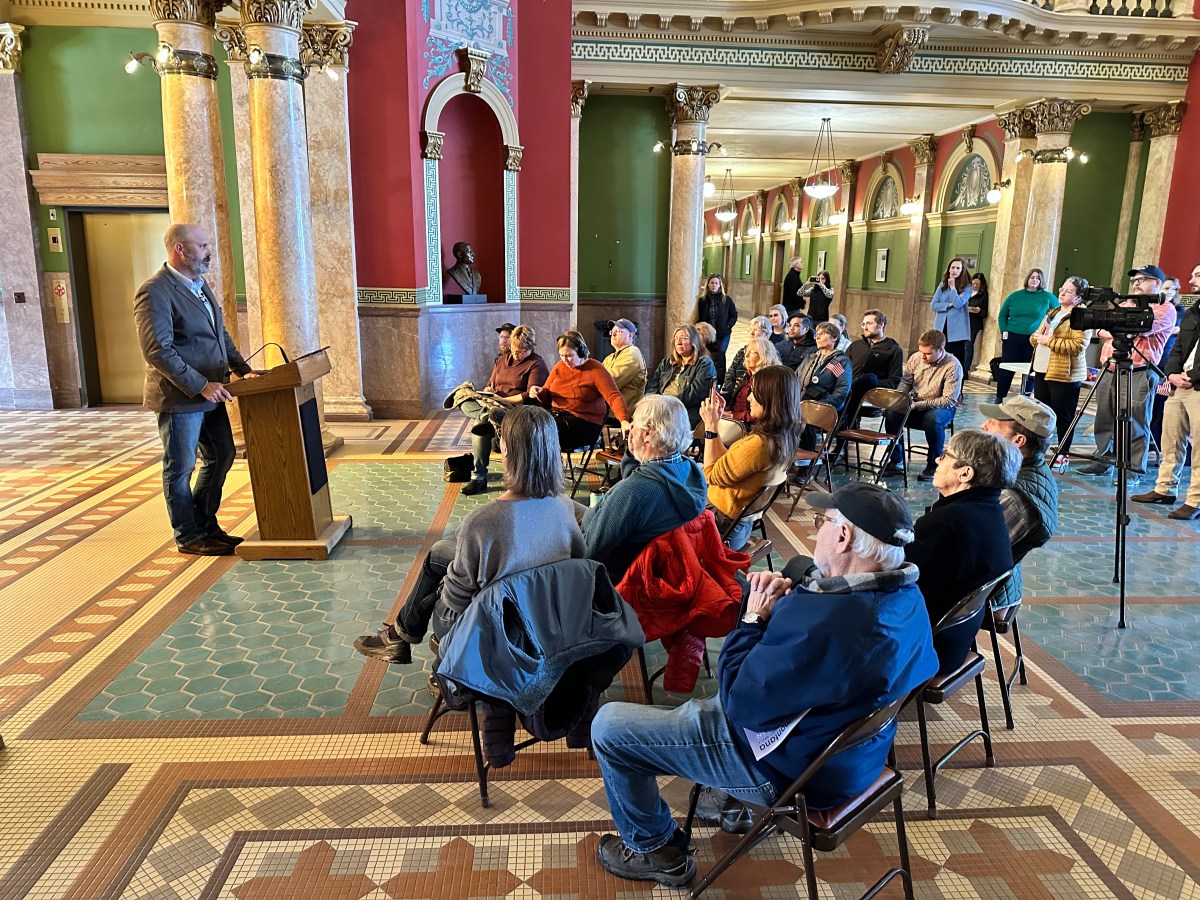
Ryan Busse, the only Democrat currently mounting a challenge to Republican Gov. Greg Gianforte this year, devoted much his campaign’s first major press conference at the state Capitol this week to one of the state’s most pressing issues: housing affordability.
If elected, Busse said, he will push for a “housing for heroes” program that “coordinates with state agencies and municipalities” to “build, provide and even subsidize housing” for firefighters, police officers and other first responders who he said can’t afford to buy a home in their home community. Busse regularly hears stories, he said, of people driving 50 or more miles into Bozeman and other Montana cities for work because they can’t find housing in town.
“If we have to fund this by increasing taxes on out-of-state, second, third, fourth trophy homes, so be it,” Busse said

(A report presented to a legislative interim committee Wednesday indicated that affordable housing projects funded through the Montana of Commerce in 2023 required an average public subsidy of about $153,000 per unit.)
For his part, Gianforte has also sought to make housing a signature issue. He formed a housing task force in 2022 and threw his bully pulpit behind a bipartisan coalition of lawmakers and housing stakeholders that last year passed a number of laws intended to make it easier to build new homes. Many of those laws rein in local government zoning powers that some affordability advocates accuse of stifling the new development necessary to house Montana’s growing population.
While it’s too early to tell if those laws will successfully lower prices by boosting supply, the coalition’s legislative success has attracted national press attention as a so-called Montana Miracle. The new pro-construction housing laws have also drawn a court challenge from a Bozeman-based homeowners group, Montanans Against Irresponsible Densification, which argues that building higher-density housing will harm its members’ neighborhoods without easing the affordability crunch.
RELATED

Democrat Ryan Busse launches 2024 campaign for governor
Kalispell Democrat and former firearms industry executive Ryan Busse launched his 2024 gubernatorial campaign, taking aim at Republican Gov. Greg Gianforte.
Dem candidate Busse: Gianforte agenda is ‘fascism’
Democratic gubernatorial candidate Ryan Busse held the first major press conference of his campaign this week, laying out some basic legislative priorities and directing astringent criticism at incumbent Republican Gov. Greg Gianforte.
In response to a question about Gianforte’s pro-construction housing agenda Tuesday, Busse said encouraging high-density housing is “part of the answer, for sure.” But he also said Gianforte is too focused on market-oriented solutions that will help developers make money but may not aid struggling residents. Busse then pivoted to blaming the governor for allowing property taxes to increase.
“We have to have a state governor, and government, who cares about doing all the small things that make it easier on working people,” Busse said.
LATEST STORIES
Montana drops bison lawsuit against Yellowstone National Park
Motion to dismiss ends nearly two years of litigation, renewed tension over who gets a say in bison management
Poll: Rep. Troy Downing ahead in Eastern U.S. House District
A Montana Free Press-Eagleton poll conducted between Aug. 27 and Sept. 7 shows incumbent Rep. Troy Downing with a substantial lead over Democrat Brian Miller in their race for Montana’s Eastern District U.S. House seat.
What Missoula’s homelessness response looks like one year after Johnson Street shelter closure
The last 12 months without the 165-bed emergency shelter have left Missoula’s longstanding homeless shelter full more often than not and have strained other organizations serving people living on the street. Limited shelter capacity also means more people are living outside to navigate the city’s camping restrictions, providers said.
