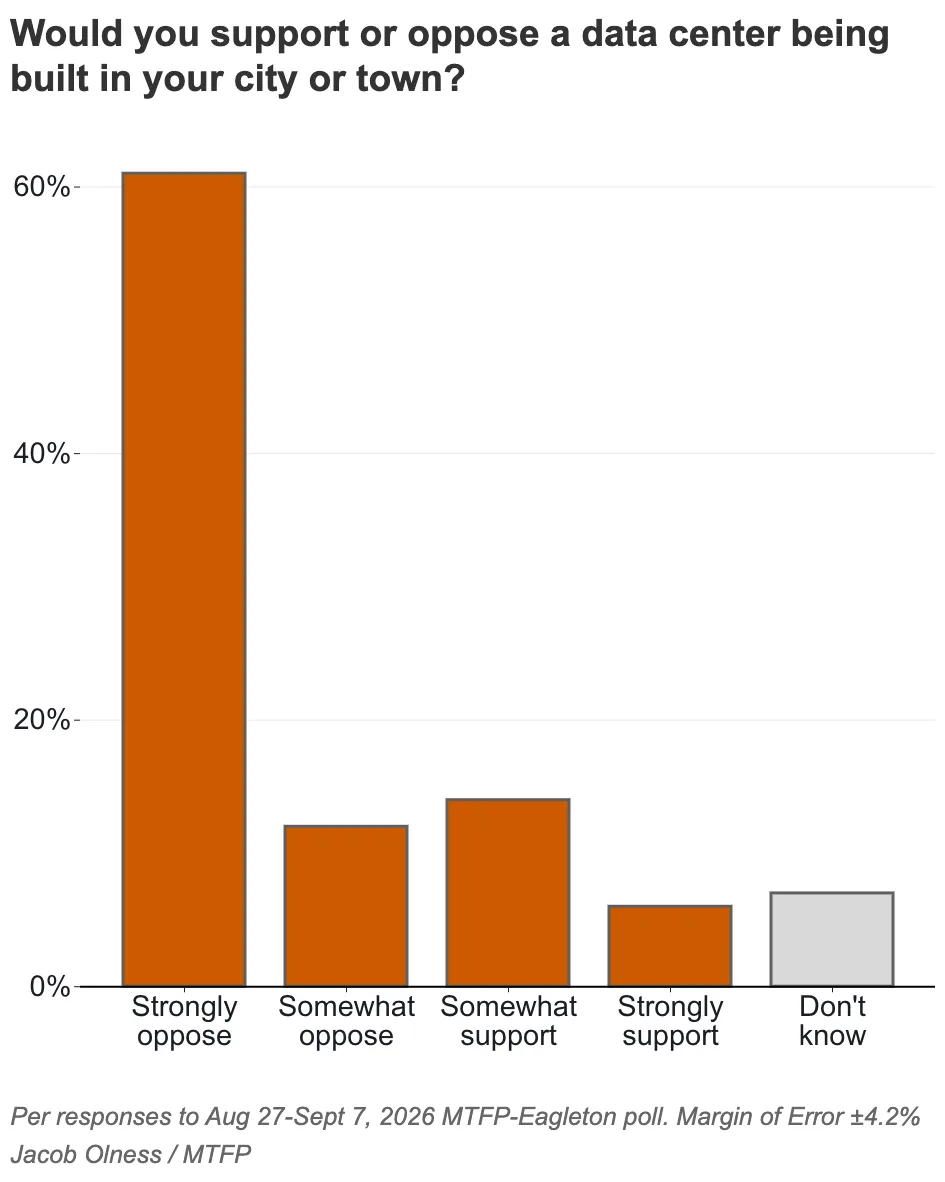
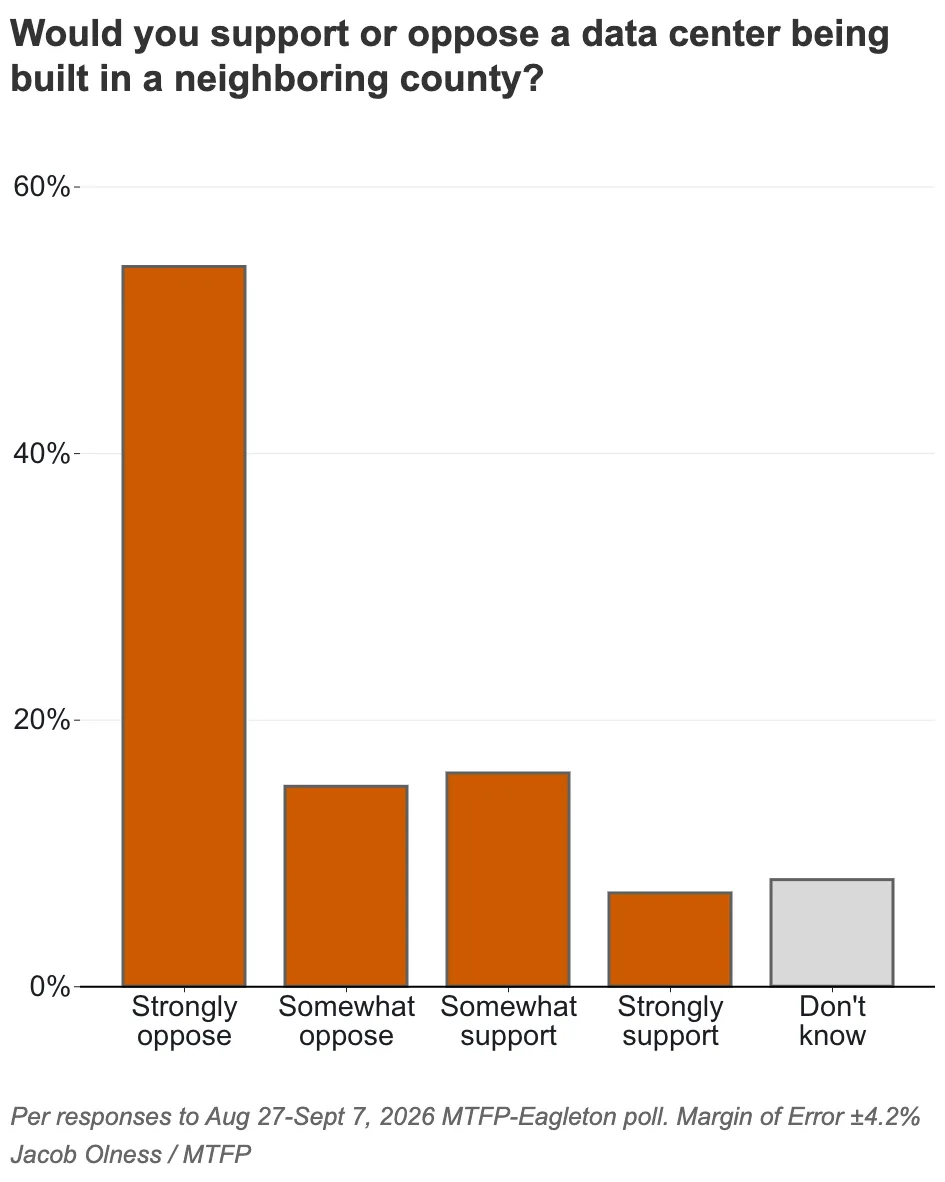
Nearly three-quarters of registered voters in Montana oppose data centers being built in their city or in a neighboring county. That’s according to a new Montana Free Press-Rutgers Eagleton poll conducted from Aug. 27 to Sept. 7. Democrats in the state, according to the poll, are more likely to be strongly opposed to new data centers than independent voters or Republicans, but opposition was considerable across party lines with a majority of voters, regardless of political party, opposed.
The survey echoes sentiments from communities across the state as more developers eye Montana for building AI data centers. NorthWestern Energy, the state’s largest energy utility, has signed redacted agreements to power some of the proposed facilities, a move that has drawn criticism from the utility’s existing customers and prompted review by Montana’s Public Service Commission.
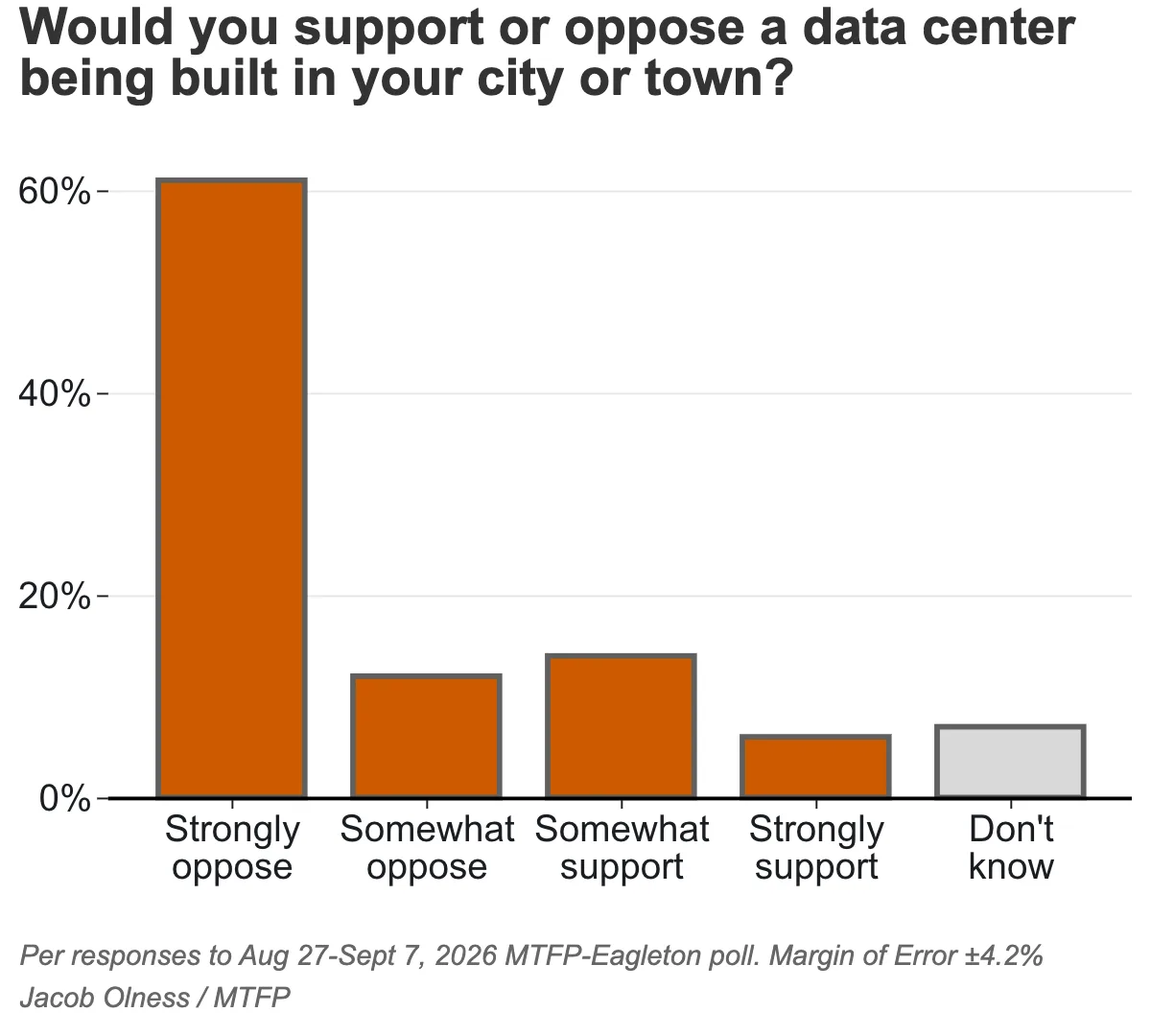
Over the past few months, individuals and groups have fought back with grassroots petitions trying to curb the growth of data centers organized in Butte-Silver Bow and Yellowstone counties. A petition in Yellowstone County would have put a data center development moratorium on the ballot in November, though it has faced stumbling blocks from the county commission.
The issue of data centers is also on voters’ minds heading into the general election. According to the poll, 48% of registered voters said data centers are very important to their decision about who to vote for, while 28% said it was somewhat important.
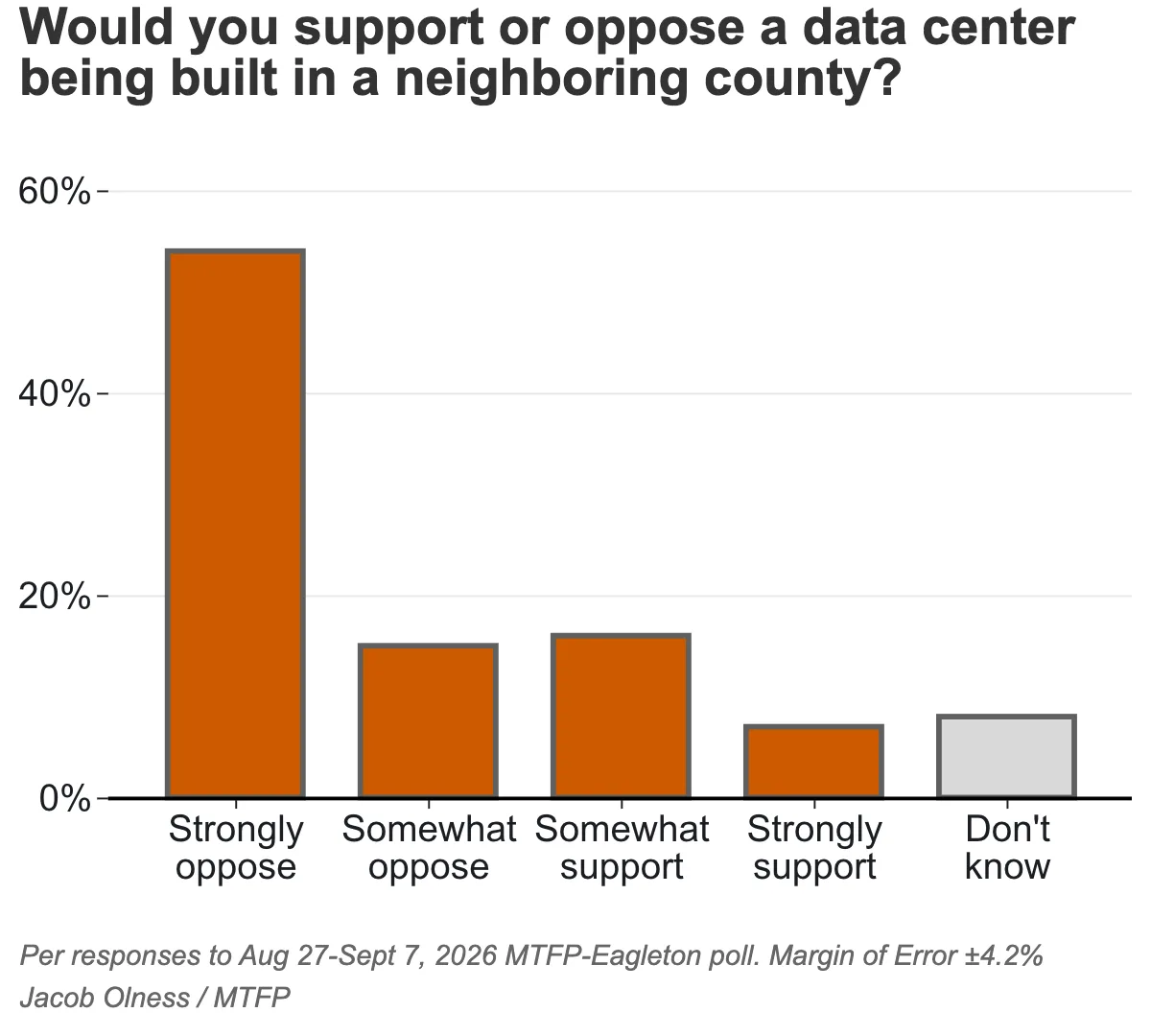
The Montana Environmental Information Center, a statewide watchdog group, has been tracking data center proposals across the state and hosting community panel discussions in places like Butte, Broadview, Boulder, Missoula and Great Falls.
Anne Hedges, the organization’s executive director, says these results track with what she’s heard from concerned citizens. “We know the dangers and benefits of AI,” Hedges said. “But where it really intersects with our world right now is data centers. Montanans are skeptical. They don’t see how the benefits flow into this state; the benefits flow to the tech bros.”
In the poll, 45% of respondents said the construction of data centers creates jobs and are good for the economy, while 491% disagreed. Without guardrails in place, Hedges says everyday Montanans and existing NorthWestern Energy ratepayers could end up subsidizing energy development for data centers, and paying more for power. That has already happened in other states, where data centers have been built, and electricity prices have skyrocketed.
An overwhelming majority, 92%, of registered voters in Montana said the state government should create regulations to limit the impact data centers have on electricity prices. Hedges called the survey’s results a red flag. “It is time to do something in the public interest instead of billionaire interests,” she said. “Montanans want protection and they expect their elected officials to do something about this to protect our air, water, climate and property rights.”
Ahead of the 2027 legislative session, lawmakers have already begun requesting bills about data centers. During the interim, legislative committees overseeing energy, water policy, and modernization/risk analysis have discussed the impacts of data centers and the need for regulatory legislation. One bill draft requested by the Energy and Technology Interim Committee, would direct the PSC on how to regulate utilities to protect residential and small business customers from bearing the cost of power to large load customers, like data centers. Hedges said Montana is in a unique position to regulate before more data centers are built.
This Montana Insights Poll surveyed registered voters in Montana who were invited by text message to complete an online survey. Data was collected from Aug. 27, 2026, to Sept. 7, 2026. Participants were recruited using a probability-based method, meaning they were randomly drawn from the state’s registered voter file so every voter had a known chance of being invited. The results were weighted during analysis to reflect the demographics of Montana’s registered voters. The survey’s overall margin of error is +/- 4.2%. The full methodology is available to review here.
LATEST STORIES
Poll: Men, Republicans and older Montanans more likely to support ICE
Montanans are largely split on the issue of immigration enforcement, with men, Republicans and older adults largely approving and Democrats, women and younger adults largely opposing U.S. Immigration and Customs Enforcement, a recent Montana Free Press-Rutgers Eagleton poll found.
A cancer survivor hoped to work — then she lost her Medicaid disability coverage
Patients with disabilities have long struggled with administrative hoops, blunders, and confusion when trying to qualify for federally subsidized health coverage because of their illness. Now, new federal Medicaid work requirements mean states face the additional task of deciding who qualifies for a medical exemption. That means reviewing medical cases for an even larger swath of Medicaid enrollees.
Montana drops bison lawsuit against Yellowstone National Park
Motion to dismiss ends nearly two years of litigation, renewed tension over who gets a say in bison management