

House Republicans and Democrats in the Montana Legislature voted Tuesday to reject a bill that would have criminalized parents and other adults who help minors under the age of 16 obtain medical treatments related to gender transition.
The move marks the second bill affecting the rights of transgender minors voted down by House lawmakers this session. Another bill regulating drag shows also failed to pass the majority-GOP chamber.
Several other bills that restrict how transgender people navigate public spaces have advanced over the course of the current session. Bills that require strict gender segregation of public bathrooms, locker rooms and athletic participation were signed into law in late March. One of those policies has already been temporarily blocked in court.
The 41-57 vote on the adult criminalization bill, Senate Bill 164, came after minimal debate during Tuesday’s floor session. One supporter, Rep. Braxton Mitchell, R-Columbia Falls, described the measure as broadly protecting minors by adding gender transition-related treatments to the definition of child endangerment.
“We have a duty to provide care, protection and support. That includes protecting children from experimental procedures they may one day regret,” Mitchell said.
The legislation would have applied to surgical procedures, puberty blockers or hormone treatments administered “for the purpose of altering the appearance of the child or affirming the child’s perception of the child’s sex when the appearance or perception is inconsistent with the child’s biological sex.”
Impacted individuals included any person, “whether or not the person is supervising the welfare of the child,” who “knowingly procures or provides” the prohibited treatments under the listed circumstances.
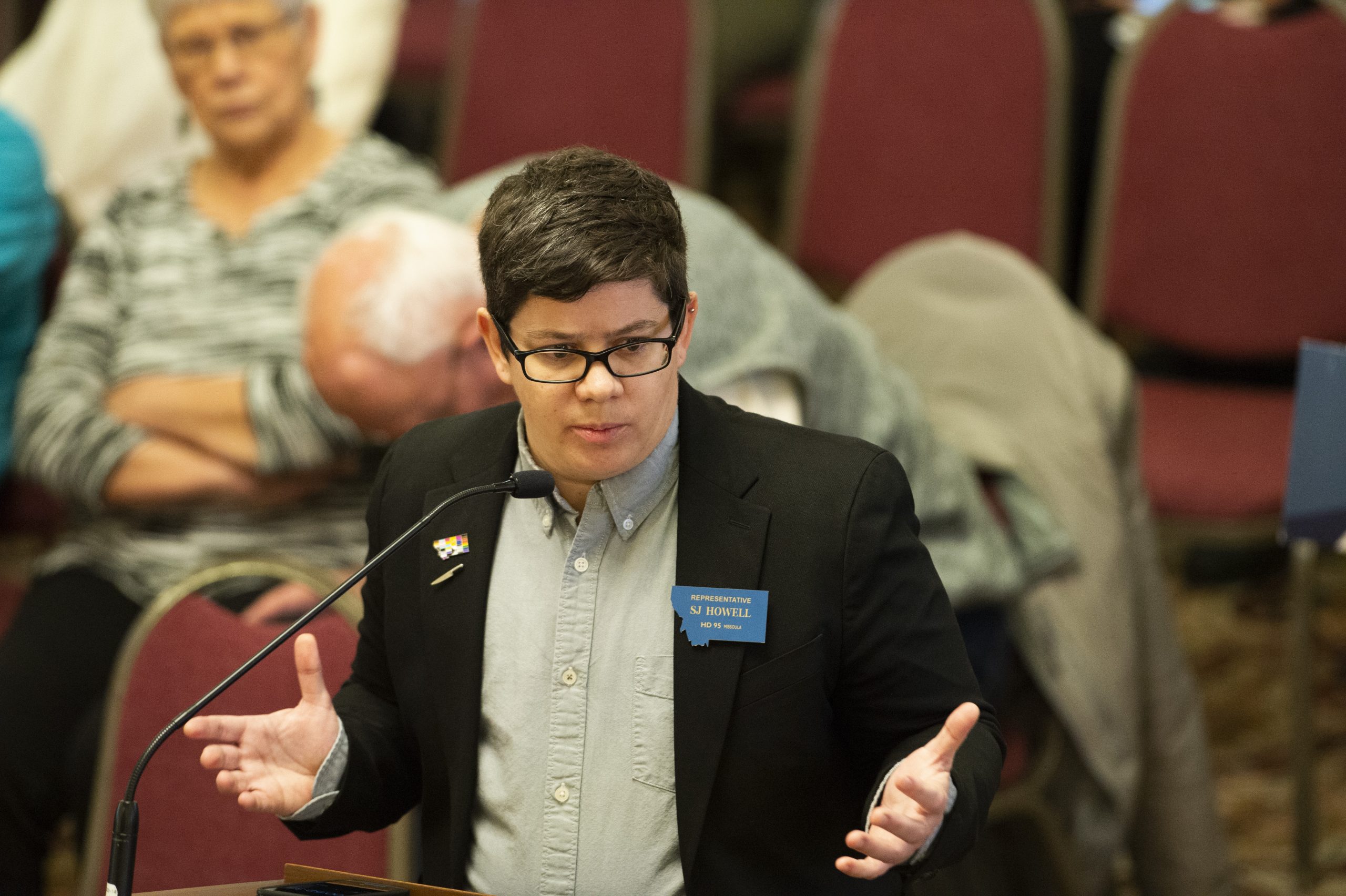
Rep. SJ Howell, D-Missoula, one of two openly trans lawmakers currently serving in the House, urged lawmakers to oppose the bill. They argued that it would create a felony, and other unintended consequences, for parents and medical providers navigating a child’s genetic anomalies and chromosomal conditions.

The lawmaker described the story of one constituent who was seeking treatment for his young daughter, who was born with an XY chromosome. Later medical complications required her to receive estrogen treatments, which a doctor in Montana said would be considered prohibited under SB 164.
“The doctor said if Senate Bill 164 passes, this dad is gonna have to take his daughter down to Denver to get that treatment. This guy doesn’t have the money to fly back and forth to Denver with his daughter every month to get the treatment,” Howell said, adding that the parent would still be “considered a felon here in Montana.”
During debate, Rep. Brad Barker, R-Red Lodge, said he would be a “no” vote on the bill despite personally opposing “any type of gender transition in our kids and our youth.” While other bills dealing with similar medical services are still in play this session, Barker cast SB 164 as overly broad.
“I think it creates risk for our medical community to be able to treat other types of issues and puts them at risk,” Barker said. “And I also don’t like the thought of criminalizing parents.”
Sen. John Fuller, R-Kalispell, called Tuesday’s vote an example of “moral invertebracy” in a written comment to Montana Free Press, and compared the treatments outlined in SB 164 to “mutilation.”
“It isn’t any different than other forms of child abuse for the harm it causes,” he said.
In a statement Tuesday afternoon, Howell said they were “heartened” by SB 164’s outcome.
“This Legislature has made clear we won’t pass bills that attack trans Montanans just because they cross our desks,” they said.
A bipartisan coalition of lawmakers voted down a similar bill, House Bill 754, earlier in the session, as well as a bill that would have given parents expanded access to their children’s medical records. Opponents argued that the wording of that proposal, House Bill 653, would endanger children experiencing abuse or neglect at home, including those who are transgender or otherwise questioning their gender or sexuality.
Two other bills related to gender transition-related care for minors and adults are still percolating through the legislative process. Both would extend the statute of limitations and lower the legal threshold for medical malpractice cases brought over specific types of gender related care.
House lawmakers amended one of those bills, House Bill 682, to create a four-year window for lawsuits, a decrease from the legislation’s original language of 25 years. That amendment was reversed by Senate lawmakers. It has not yet been returned to the House for reconciliation.
This article was updated April 9, 2025, to include a comment from Sen. John Fuller.
LATEST STORIES
Montana medical board revokes cancer doctor Thomas Weiner’s license
A panel of medical board members unanimously decided to revoke the medical license of former Helena cancer doctor Thomas Weiner, a decision that bars him from practicing medicine in Montana.
Struck down by court, education savings accounts could persist for current school year while litigation continues
Education groups and disability rights advocates are sparring with the Montana Office of Public Instruction over whether publicly funded savings accounts for private education and services for disabled students can remain in effect for the duration of the school year.
Former Senate President Ellsworth charged with official misconduct
Former Republican state Senate President Jason Ellsworth will be charged with misdemeanor official misconduct for allegedly attempting to award $170,100 worth of government work to a friend, the state Department of Justice said.