

The state Supreme Court has upheld Montanans’ right to open government meetings and public disclosure concerning the governor’s appointment of replacement judges for state district court.
In an order issued Tuesday, a five-justice panel ruled in favor of the Choteau Acantha newspaper and Montana Free Press, who argued that an advisory council appointed by the governor erred by closing its proceedings while reviewing candidates for a 9th Judicial District judgeship in 2023.
Members of the advisory council argued that the judicial candidates had a right to privacy that outweighed the public’s right to know more about the applicants. The state Supreme Court disagreed, siding with an earlier decision by 1st District Court Judge Mike Menahan.
“Because we conclude that the statute governing the open meeting procedures was violated, we affirm the District Court’s determination that the advisory council’s meeting was subject to the open meeting laws and that a blanket closure was improper,” Supreme Court Justice Jim Rice wrote the unanimous order for the five justices.
The ruling doesn’t nullify the appointment of Gregory Bonilla, the successful candidate chosen by Republican Gov. Greg Gianforte.
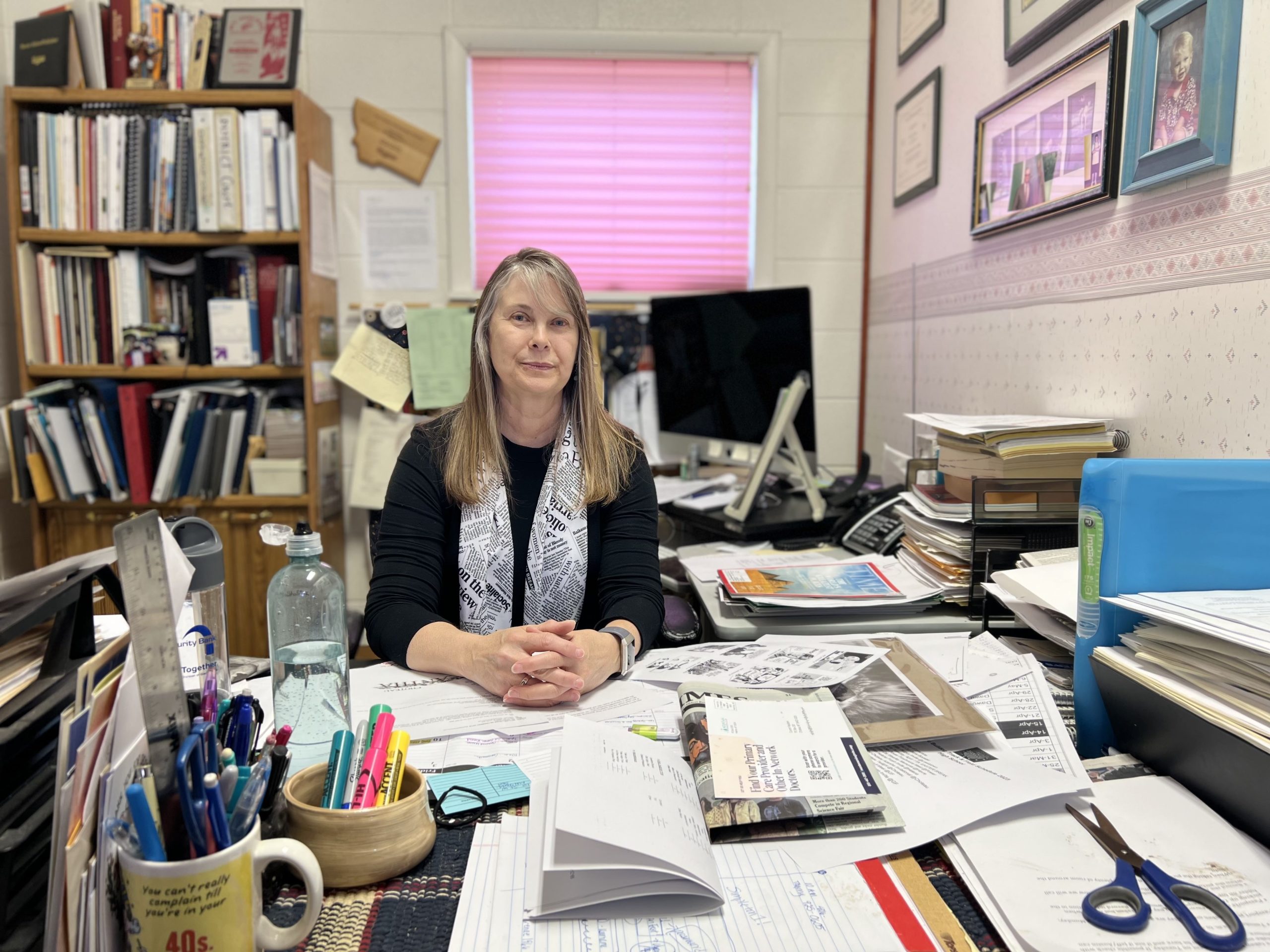
Acantha Publisher Melody Martinsen said Tuesday that without disclosure, the public knew nothing about how the council reached the decision to send the names of both candidates — Daniel Guzynski and Bonilla — to Gianforte.
“No one in the 9th Judicial District knows why the council made the recommendation to send both names to the governor,” Martinsen said.
In March 2023, Martinsen rose to object as the advisory council closed its Conrad meeting to review candidates for the vacancy created when Robert Olson said he was retiring. The council reasoned that judicial candidates had a right to personal privacy, but Martinsen argued that the public’s right to know more took precedence.
Before the 2021 legislative session, judicial vacancies were filled by the Judicial Nominating Commission. But a law passed that year, Senate Bill 140, eliminated that commission and gave the governor the power to appoint judges to fill vacancies, which Gianforte has done with input from advisory councils.
It was a 11-member advisory council that reviewed the applications of Guzynski and Bonilla. Nine of the council members ranked Guzynski as their first choice. One member ranked Bonilla as their first choice.
Gianforte chose Bonilla, who has since run unchallenged for the position in the 2024 general election. There was useful information about both men posted to the governor’s website, but it wasn’t the same as watching the council deliberate, Martinsen said.
“I would like to see every newspaper in Montana that has a (district court) vacancy in the area that they cover be present and then make sure they know that we have this ruling, that you can’t use a blanket approach to privacy outweighing the public’s right to know. It has to be specific,” Martinsen said.
Montana Free Press Editor in Chief John Adams in a written statement said the publication joined the Acantha as a plaintiff to defend the rights of all Montanans who value open, honest, and transparent government.
“The court’s decision makes clear that blanket closures of public meetings violate Montana’s open meetings laws. It affirms that while consideration of individual privacy is appropriate, it must be weighed against the public’s foundational right to know,” Adams said in a statement. “Government officials cannot simply assert privacy concerns as a reason to exclude the public. They must justify closures with evidence that specific privacy rights outweigh the public’s right to access governmental processes.”
latest stories
Held v. Montana plaintiffs sue state over bills passed by the 2025 Legislature
Thirteen plaintiffs who successfully challenged Montana’s energy-permitting policies in Held v. Montana are now asking the state Supreme Court to weigh in on a trio of climate- and environmental review-related bills state lawmakers passed in 2025. The plaintiffs argue that the challenged bills don’t uphold their constitutional right to a “clean and healthful environment,” which courts have interpreted to include a “stable climate system.”
Montana libraries can be open fewer hours. Dozens aren’t happy about the change.
Montana State Library Commission members in favor of the change believe it would empower libraries to improve their online resources, enable rural libraries to adapt to their communities’ needs and introduce flexibility at a time when library visitation is on the decline. Local libraries worry that local officials will cite the reduced minimum number of hours as justification for cutting public funding.
Did reintroducing wolves in Yellowstone somehow save the park’s aspen trees?
Claims that wolves have rescued Yellowstone National Park aspen trees through a ‘trophic cascade’ oversimplify a complex story.